

During a meeting on 8/17/2019, philosophers of the community discussed a case from the Intercollegiate Ethics Bowl Competition regarding the moral and practical implications of granting rivers legal personhood. Themes of the discussion included practical ethics, environmental ethics, philosophy of culture, religion, language and law. Three concepts that presented themselves in spirit during this discussion are important to note, as they have deep roots in the history of philosophy. These are utilitarianism, philosophy of language (specifically that of Wittgenstein), and philosophical egoism.
Enjoy!

Case 15: Rivers Are People Too
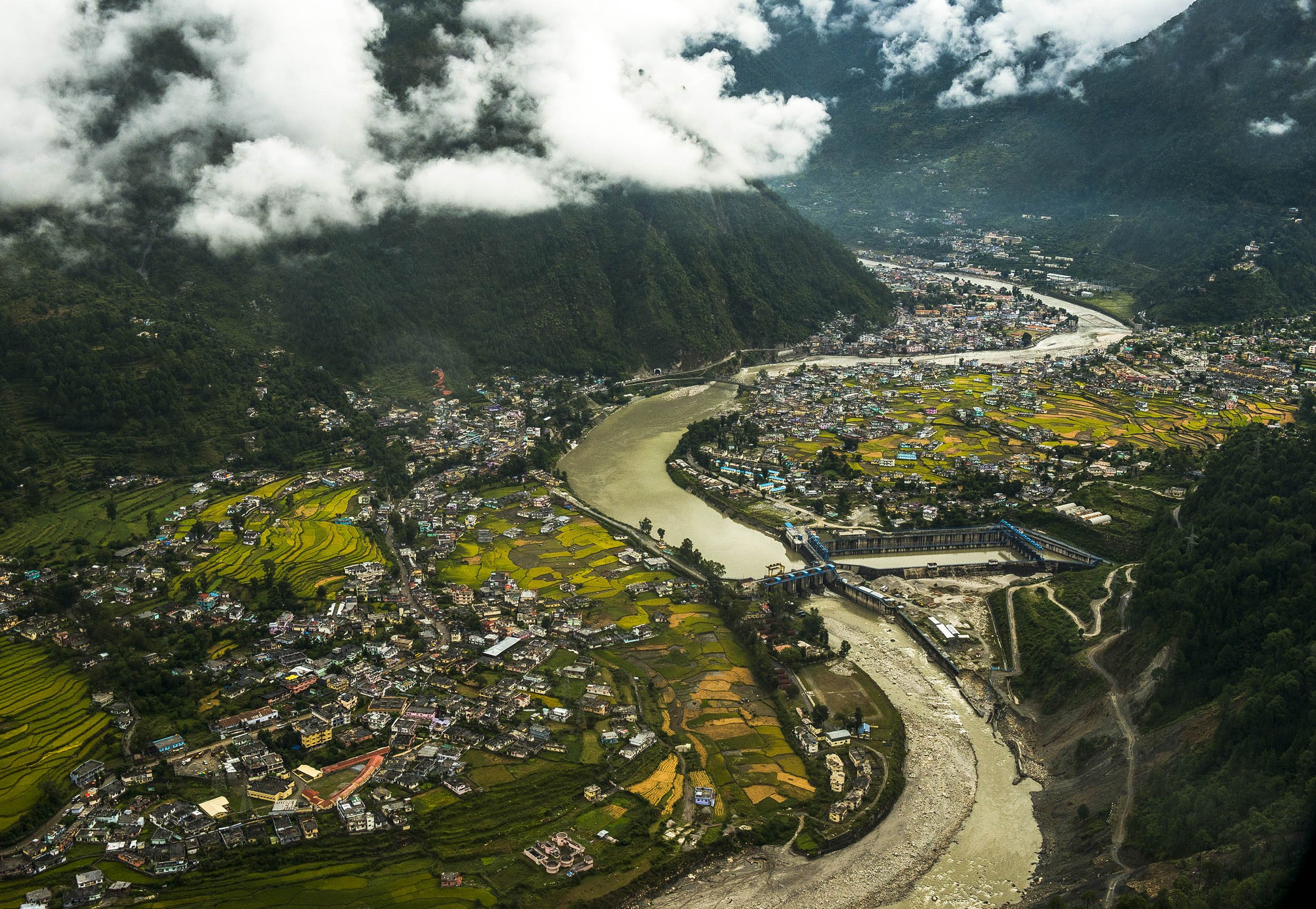
On March 15th, 2017, New Zealand passed a law declaring the Whanganui River a legal person. The Whanganui (JUANG–GUH–NEW–EE) is the first river to gain legal personhood, but India quickly followed suit and granted personhood to both the Ganges and Yamuna rivers. Court appointed guardians are now responsible for being trustees of the rivers’ rights. These rivers cannot vote or buy beer, but they now have legal standing in national courts. Maori (MOW-REE) spokesperson Gerrard Albert says of the legal recognition: We have fought to find an approximation in law so that all others can understand that from our perspective treating the river as a living entity is the correct way to approach it, as in [sic] indivisible whole, instead of the traditional model for the last 100 years of treating it from a perspective of ownership and management.
In addition to reflecting an ancestral view of personhood, there are practical advantages to the new legal status of the Whanganui and Ganges. Each day, around two billion liters of waste are deposited in the Ganges alone. No longer will attempts to protect the river’s health be required to show harm to people, because the rivers themselves will have rights. According to one source, “[t]he decision, which was welcomed by environmentalists, means that polluting or damaging the rivers will be legally equivalent to harming a person.”
However, these new protections have some people worried about the possible effects of protecting rivers on the local human populations. For instance, city sewage, farming pesticides, and industrial waste are all currently dumped into the Yamuna, and these waste products are, to some extent, an unavoidable aspect of urban development, farming practices, and industry. An immediate cessation of dumping this waste would adversely affect the people living in the area and benefiting from these industries.
[Case from the 2017 Regional Intercollegiate Ethics Bowl. © Association for Practical and Professional Ethics 2017 http://ethics.iit.edu/eb/RiversarePeopleToo.pdf%5D
Moral Dimensions:
- Philosophy of Personhood
- Personhood via Legal Representation
- Cultural Representation & Significance
Relevant Philosophical Concepts & Questions:
- Semantics of the term “Person”
- Psychological/Societal Egoism, or “What’s in our best interest?”
- What are the potential consequences of using “person”?
- Where do our ideas on personhood originate?
- If we call a river a person, where do we draw the line?
Philosophy of Personhood:
From proponents:
It is first important to differentiate a person from a human being. Rivers are not human beings, but we would like to assert that they could be persons. This requires us to, first, establish a working definition of the word person.
To be a person, one must be a subject of a life; to be a person, one must, at a basic level, contain a life– a life which can be good or bad (in relation to said person’s existence and in relation to the world in which it lives). For this reason, it is acceptable to consider a river as a person for legal, cultural and basic philosophical purposes.
Consequently, a human being is a person who additionally contains the potential to self-reflect, or to consciously interpret and analyze his/her/their experiences. This means that a human being is further able to acknowledge the fact that he/she/they can, or does, have a good or bad existence.
The river can have a life which can be good or bad. In asserting this we assert that it has personhood; it simply is a person. Further, one might state that the river has a certain level of interests like a person does, those being abundance, independence, and life. The river’s life is represented by the many creatures that inhabit it; the river’s “life” in essence, is contained in its ability support itself via natural means. It even carries a certain influence over human beings, and provides support that humans are otherwise unable to live without: water, food, resources, agricultural and economic support. So calling it a person is actually within our best interests, anyways.
From critics:
Rivers should have rights, but they should not be called persons. They should be protected under a different legal term.
The way in which the world currently is, does not intuitively account for a natural entity to be called a person. The way in which the word “person” is currently used in society truly dictates what we consider a person to be. Can we start calling mountains persons, too? Buildings and corporations are labeled as persons in a legal sense, but this it mainly done to hold the corporation accountable for its actions. There are people behind it, though they aren’t actually it themselves. We can’t hold a river accountable for flooding, can we?
Personhood via Legal Representation
From critics:
It seems that the only arguable reason to call a river a person might just be the practical reasons for doing so. However, does giving the river a sense of legal personhood really change the way in which humans will view the river? Harming the river will now be the legal equivalent of harming a person, but will it remain the moral equivalent?
People are naturally egocentric, meaning that many will not be able to give the river moral significance without a change in perception. Sure we may change our definition of personhood, but many will not understand, nor support this until they change their perception on the importance of our environment. Rather than labeling the river and protecting it as a person, might we find a more plausible way to invoke perceptual changes in society? Moreover, what is our definition of harm going to entail? A river can’t perceive that it is being harmed in the same way a person might.

From proponents:
The legality ensures that the moral significance of the river is established and maintained. Giving it a legal sense of personhood forces people to acknowledge the fact that the river has “interests”, and it also grants them the awareness to see that a natural entity that contains life doesn’t have to be like us in order to be important. In the same way we pass laws to protect animals, we would be doing so for the river.
Furthermore, touching on the question of harm: it can certainly be argued that persons– even those without rational faculties– are harmed everyday, subtly, by pollution emitted from cars and factories and even further by the very foods they consume. These are not absolute harms. So putting small amounts of pollutants into the river might be harmful in the sense that it might cause micro- consequences to the river, but none that are permanent or damaging to the long term wellbeing of the river. It is a bearable harm in that sense.
Cultural Representation & Significance
From proponents:
It is important to take into account the cultural significance of allowing the Maori people to protect and value this river. Treating the river as a living entity, an indivisible whole, rather than as a thing to be owned allows them to maintain a sense of united piety. Furthermore, the Maori people have an ancestral view of personhood, and as such, it is important to note that a socially-contrived definition of personhood must also take into account connotative variations existing in multiple languages, not only those of a Eurocentric worldview. In this way, the river, philosophically and culturally speaking, possesses a basic personhood.
From Critics:
We understand and respect the Maori culture’s worship of the river. In a lot of ways it’s true that the river has a higher sense of importance to it than humans do. The river sustains life– both human, animal, and plant. However, we must question whether or not granting the river a label such as person encourages duplicitous behavior in law and in language. It seems that the best case, to promote social and environmental harmony, would mean suspending the use of the word person until a legal and linguistic understanding of the word can be agreed upon.
A final thought from supporters:
In calling the river a person, we strongly assert that it’s life (well being) has moral significance. It is an independent and unified entity for which things can be good or bad. In asserting that there is moral weight to calling the river a person, we think that the point is missed if we do not call the river a person on a technicality as such as linguistic preference or tradition.
Thus, if in this case, it benefits the majority to call the river a person, and it makes the most sense in a legal & practical way, then in the very least the river should be called a person for the sake of the Maori people, the interdependence of those people on the river and the fact that this is simply the way things ought to be done based on the current state of law in this world. To write and propose and vote on an entirely new law simply because we have a technical objection to the term personhood, would sidetrack the environmental importance of passing such a law.
A final thought from critics:
There really doesn’t seem to be much of a disagreement, here, between us, other than semantically. We ought not call the river a person. While the technicality of the term, legally and spiritually speaking, might encourage us to do so for practical and ritualistic purposes, this does not mean that it in actuality is a person. Could an unintended consequence of this change be that us as humans begin to change our definitions as persons to fit whatever societal instrument we please? Is there not something intrinsic and immutable about keeping language with its intended use? In allowing for the meaning of words to preemptively transform, do we allow a sort of linguistic desensitization to erupt towards thinking, speaking, emotive creatures? The Maori and Ganges river deserve protection, but to do so under a guise of personhood is not the way to do it.
The Final Result!*
Call it a person: 2 philosophers
Protect the river, but don’t call it a person: 4 philosophers
Help me, I have no idea what I think anymore: 2 philosophers
Abstaining: 1 philosopher
What do you think?
*Indicates votes counted by those present at the meeting.
 Discovering Philosophy